
The Dawn of a Solar Revolution: Inside the World of xMega Solar Farms
- TPC SOLAR

- Sep 22, 2025
- 8 min read
In an era defined by the urgent need for clean, sustainable energy, the world is witnessing a monumental shift towards renewable sources. At the forefront of this transformation are mega solar farms, vast expanses of photovoltaic (PV) panels that are reshaping our energy landscape and offering a powerful solution to the climate crisis. These colossal projects, some spanning areas equivalent to thousands of football fields, are not just about generating immense quantities of electricity; they represent a convergence of cutting-edge technology, innovative land use, and sophisticated energy management.

From the sun-drenched deserts of the Middle East to the expansive plains of the United States and the innovative floating farms in Asia, mega solar projects are pushing the boundaries of what is possible in renewable energy. This article delves into the world of mega solar farms, exploring the latest advancements, the critical role of artificial intelligence (AI), groundbreaking practices like agrivoltaics and floatovoltaics, and the seamless integration of energy storage systems that are making solar power a reliable, 24/7 energy source for a sustainable future.
A Global Tour of Solar Giants: The World's Largest Solar Farms
The sheer scale of modern solar farms is a testament to the global commitment to renewable energy. These projects are not only engineering marvels but also crucial contributors to reducing carbon emissions. Here's a look at some of the most significant mega solar farms currently in operation or under development:
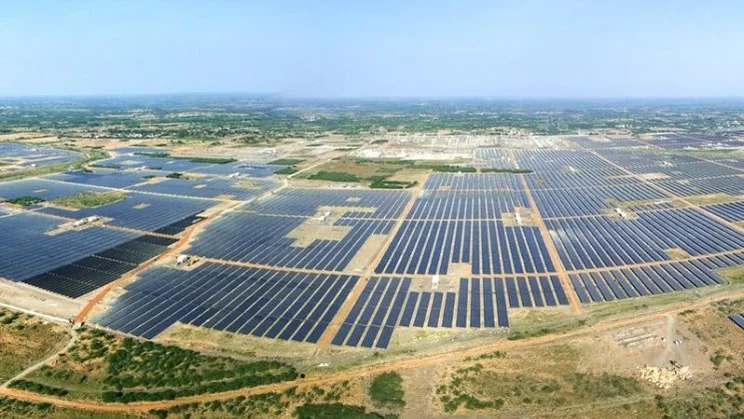
Gonghe Talatan Solar Park, China: Leading the charge is the colossal Gonghe Talatan Solar Park in Qinghai, China. With a staggering capacity of 15,600 MW, it stands as the largest solar park in the world. This project is a cornerstone of China's ambitious renewable energy targets and a powerful symbol of the nation's manufacturing and deployment capabilities in the solar sector.
Al Dhafra Solar Farm, UAE: In the United Arab Emirates, the Al Dhafra Solar Farm is another giant, covering an area equivalent to 4,600 football fields and boasting over four million solar panels. This project is a key part of the UAE's strategy to diversify its energy mix and become a global leader in clean energy.

Bhadla Solar Park, India: Located in the sunny state of Rajasthan, the Bhadla Solar Park is one of the largest solar parks in the world, with a total capacity of over 2,245 MW. The park is a critical component of India's National Solar Mission and has been instrumental in driving down the cost of solar power in the country.
Noor Abu Dhabi, UAE: Another significant project in the UAE, the Noor Abu Dhabi solar plant, has a capacity of 1.2 GW and is one of the world's largest single-site solar projects. It provides clean energy to thousands of homes and has significantly reduced Abu Dhabi's carbon footprint.

Tengger Desert Solar Park, China: Often referred to as the "Great Wall of Solar," the Tengger Desert Solar Park in China is another massive installation with a capacity of over 1,500 MW. It showcases China's ability to leverage its vast desert regions for large-scale solar energy production.
These mega-projects are just a few examples of the incredible momentum behind the global solar industry. They demonstrate that with the right investment, technology, and political will, solar power can be a dominant force in the world's energy future.
The Intelligence Behind the Panels: AI's Transformative Role in Solar Energy
The efficiency and reliability of mega solar farms are increasingly being supercharged by artificial intelligence. AI is no longer a futuristic concept in the solar industry; it is a powerful tool being deployed today to optimize every aspect of solar energy production, from design and construction to operation and maintenance.

Optimized Energy Production: AI algorithms analyze vast amounts of data, including historical weather patterns, real-time atmospheric conditions, and the position of the sun, to forecast energy production with remarkable accuracy. This allows grid operators to better manage the integration of solar power and ensure a stable supply of electricity. AI-powered systems can also optimize the performance of individual solar panels and inverters, ensuring that the entire farm is operating at peak efficiency.
Predictive Maintenance: One of the most significant impacts of AI is in the area of predictive maintenance. By continuously monitoring the performance of solar panels, inverters, and other equipment, AI algorithms can detect subtle anomalies that may indicate an impending failure. This allows maintenance crews to address issues proactively, before they lead to costly downtime. This predictive capability is crucial for mega solar farms, where the failure of even a small percentage of panels can result in significant revenue losses.

Automated Operations and Robotics: AI is also enabling the automation of many tasks on solar farms. Drones equipped with thermal imaging cameras can quickly and efficiently inspect thousands of solar panels, identifying defects that would be impossible to spot with the naked eye. Robotic systems are being developed to clean solar panels, a critical task in dusty environments that can significantly impact energy production. These automated solutions not only reduce operational costs but also improve the safety of workers.
Enhanced Grid Integration: The intermittent nature of solar power presents a challenge for grid operators. AI is helping to address this challenge by enabling more sophisticated grid management strategies. AI-powered systems can predict fluctuations in solar energy production and coordinate with energy storage systems to ensure a smooth and reliable flow of electricity to the grid. This is essential for maintaining grid stability as the penetration of renewable energy increases.
Smarter Project Development: AI is also being used to identify the best locations for new solar farms. By analyzing satellite imagery, topographical data, and grid infrastructure information, AI algorithms can identify sites with the optimal combination of solar resources, land availability, and grid connectivity. This helps to de-risk solar projects and ensure that they are developed in the most cost-effective and environmentally responsible manner.
The integration of AI is transforming mega solar farms from simple power plants into intelligent, self-optimizing energy systems. As AI technology continues to evolve, its impact on the solar industry is only set to grow, further accelerating the transition to a clean energy future.
Beyond the Desert: Innovative Practices in Solar Farming
The traditional image of a solar farm is a vast expanse of panels in a sun-baked desert. While these desert-based mega-projects remain a cornerstone of the solar industry, a new wave of innovation is expanding the possibilities of solar energy production. Two of the most exciting developments are agrivoltaics and floatovoltaics, which are transforming our understanding of where and how solar farms can be deployed.

Agrivoltaics: Harvesting the Sun and the Land: Agrivoltaics, or agri-PV, is the practice of co-locating solar panels and agricultural crops on the same piece of land. This innovative approach offers a multitude of benefits. The solar panels provide shade to the crops, which can reduce water stress and improve yields, particularly in hot, arid climates. The crops, in turn, create a cooler microclimate under the panels, which can improve the efficiency of the solar panels. Agrivoltaics also provides a new revenue stream for farmers, who can earn income from both the sale of electricity and the sale of their crops.
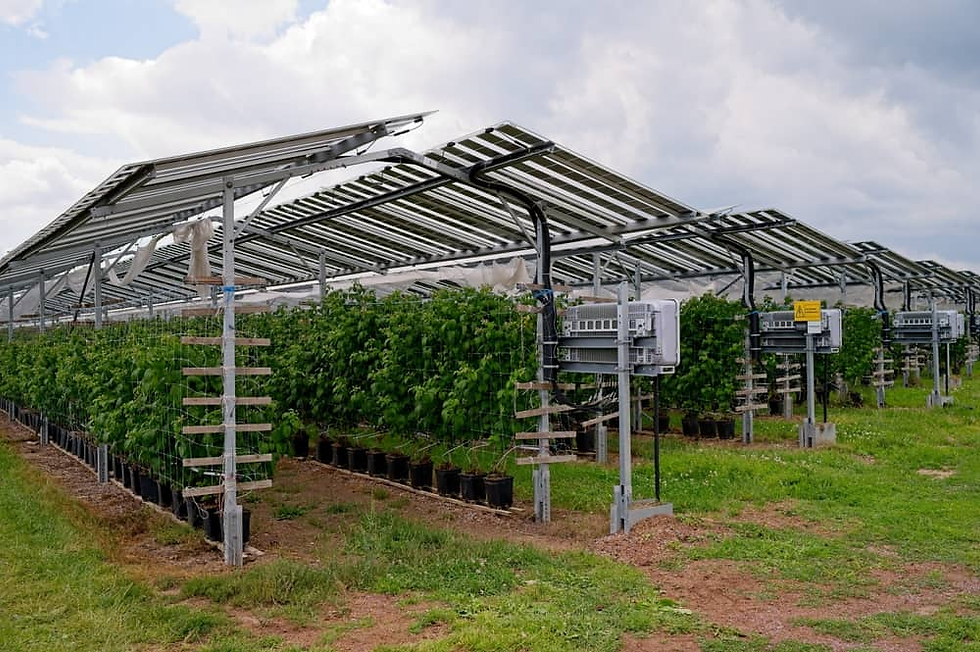
This dual-use approach to land management is particularly important in regions where land is scarce and there is competition between energy production and food production. Research has shown that agrivoltaic systems can increase land productivity by up to 60% compared to conventional single-use approaches.

Floatovoltaics: Tapping into the Power of Water: Floatovoltaics, or FPV, involves installing solar panels on floating structures on bodies of water such as lakes, reservoirs, and even the ocean. This approach has several advantages. The water has a cooling effect on the solar panels, which can boost their efficiency by up to 15%. Floating solar farms also help to conserve valuable land resources, which is particularly important in densely populated countries.

By covering the surface of the water, floating solar panels can also reduce evaporation, which is a significant benefit in regions prone to drought. Furthermore, the electricity generated by floating solar farms can be used to power nearby water treatment plants or other facilities, creating a virtuous cycle of clean energy and clean water.

Other Technological Advancements: Beyond agrivoltaics and floatovoltaics, a host of other technological advancements are driving the solar revolution forward. These include bifacial solar panels that can capture sunlight from both sides, solar trackers that follow the path of the sun throughout the day, and emerging perovskite solar cells that promise even higher efficiencies.
These innovative practices and technologies are expanding the horizons of the solar industry, making it possible to generate clean energy in a wider range of environments and with greater efficiency than ever before. As these technologies continue to mature, they will play an increasingly important role in the global transition to a sustainable energy future.
Powering the Night: The Crucial Role of Energy Storage
One of the biggest challenges for solar power has always been its intermittency – the sun doesn't shine at night, and cloud cover can reduce output during the day. However, the rapid development of energy storage technologies, particularly battery energy storage systems (BESS), is turning this challenge into a thing of the past.

The integration of large-scale energy storage is a game-changer for mega solar farms, enabling them to provide reliable, 24/7 power and play a much more significant role in the energy grid. Energy storage systems can store excess energy produced during peak sunlight hours and release it when demand is high or solar output is low.

Ensuring Grid Stability: Mega solar farms with integrated energy storage can act as a buffer, absorbing excess energy when production is high and releasing it when demand is high or solar output is low. This helps to smooth out the fluctuations in solar power generation, making it much easier for grid operators to maintain a stable and reliable supply of electricity. This is particularly important as the share of renewable energy in the grid increases, as it helps to prevent grid instability and blackouts.
Unlocking New Revenue Streams: Energy storage also opens up new revenue streams for solar farm operators. By storing energy when prices are low and selling it when prices are high, they can take advantage of arbitrage opportunities in the electricity market. They can also provide a range of grid services, such as frequency regulation and voltage support, which are essential for maintaining the health and stability of the grid. These additional revenue streams can significantly improve the financial viability of mega solar projects.
The Technology Behind the Storage: While lithium-ion batteries are currently the dominant technology for large-scale energy storage, a range of other technologies are also being developed and deployed. These include flow batteries for long-duration storage applications, pumped hydro storage which involves pumping water to higher elevations, and compressed air energy storage (CAES) systems.
The Future is Integrated: The combination of mega solar farms and large-scale energy storage is a powerful one. It transforms solar power from an intermittent energy source into a dispatchable one, meaning that it can be turned on and off as needed, just like a traditional power plant. This is a critical step in the transition to a 100% renewable energy future, and it is a trend that is only set to accelerate in the years to come.
Conclusion: A Brighter, Cleaner Future Powered by the Sun

Mega solar farms are more than just a collection of solar panels; they are a powerful symbol of our collective commitment to a sustainable future. They represent a paradigm shift in the way we generate and consume energy, moving away from the finite and polluting fossil fuels of the past and towards the clean, abundant, and inexhaustible power of the sun.

The convergence of cutting-edge technologies, from AI-powered optimization to innovative practices like agrivoltaics and floatovoltaics, is unlocking the full potential of solar energy, making it more efficient, reliable, and cost-effective than ever before. The integration of large-scale energy storage is the final piece of the puzzle, transforming solar power into a true 24/7 energy source that can power our homes, businesses, and industries around the clock.
As the world continues to grapple with the challenges of climate change, mega solar farms offer a beacon of hope, a tangible and scalable solution that can help us to build a brighter, cleaner, and more sustainable future for generations to come. The solar revolution is here, and it is being built on a foundation of innovation, ingenuity, and a shared vision for a better world.


Comments